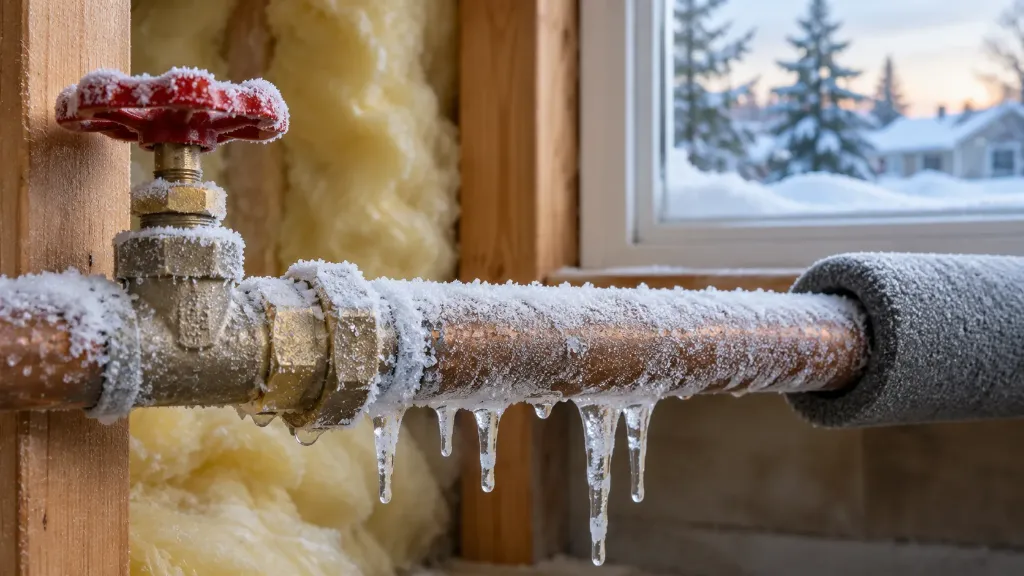
When temperatures drop below freezing in Post Falls, Idaho, the plumbing inside your home can become vulnerable to frozen pipes, unexpected water loss, and costly water damage.
A kitchen faucet that suddenly stops working might be your first warning. Other homeowners discover the problem only after water begins leaking from a damaged pipe.
The most important thing to know: If you suspect a frozen pipe, check for active leaks before attempting to thaw it. If water is escaping from a burst pipe, shut off the water supply if you can do so safely and contact a plumbing professional.
This guide explains how to recognize frozen pipes, respond to a suspected burst, protect vulnerable plumbing, and identify leaks after freezing weather.
Quick Guide: What Should You Do If Your Pipes Freeze?
| What you notice | Possible problem | Recommended action |
|---|---|---|
| Little or no water from one faucet | Frozen pipe or local plumbing blockage | Check other faucets and inspect accessible pipes |
| No water anywhere in the house | Main supply issue, frozen service line, or utility interruption | Check with your water provider and seek professional help |
| Visible water spraying or flooding | Broken pipe or failed connection | Shut off water if safe and contact a plumber |
| Damp drywall after temperatures rise | Possible leak following a freeze | Isolate water if necessary and arrange inspection |
| Water meter continues recording unexpected use | Possible plumbing leak | Investigate fixtures and consider professional leak detection |
These clues help narrow down the problem, but they are not a substitute for an inspection.
Why Do Water Pipes Freeze in Post Falls?
When water inside a pipe freezes, it expands. This can increase pressure within the plumbing system and potentially damage the pipe or its fittings.
Not every frozen pipe bursts. However, even a small crack may allow significant water to escape once normal water flow returns.
Cold weather can expose weaknesses in insulation, exterior wall cavities, and unheated spaces.
The American Red Cross identifies several common locations where freezing occurs.
1. Pipes Along Exterior Walls
Water supply lines installed against poorly insulated exterior walls may be exposed to colder temperatures than plumbing located near the center of a heated home.
Kitchen sinks and bathroom vanities positioned against outside walls deserve extra attention.
2. Plumbing in Garages
Unheated or frequently opened garages can expose plumbing to cold air.
Water lines serving laundry equipment, utility sinks, or nearby rooms may be vulnerable if they are inadequately protected.
3. Pipes in Crawl Spaces
Crawl spaces can contain long sections of plumbing that are difficult to see during everyday household activities.
Cold drafts, damaged insulation, and exposed pipe sections may increase freezing risk.
4. Outdoor Faucets and Garden Hoses
Exterior hose bibs are especially exposed.
Leaving a garden hose connected can prevent some outdoor faucet assemblies from draining correctly, potentially increasing the risk of freeze damage.
5. Irrigation Systems
Sprinkler lines, valves, and backflow-related components can be vulnerable when an irrigation system hasn't been properly winterized.
The correct winterization method depends on the system and its manufacturer.
7 Warning Signs of a Frozen or Burst Water Pipe
1. Water Suddenly Stops Flowing
If a faucet that normally works produces no water or only a small trickle during freezing weather, an ice blockage may be one explanation.
Check other fixtures before deciding the problem involves a frozen pipe.
2. Only One Area of the House Has Low Water Pressure
For example, the kitchen faucet may have little flow while the bathroom functions normally.
This can suggest a problem affecting one plumbing branch, although a blocked fixture or valve can produce similar symptoms.
3. Visible Frost on Exposed Plumbing
Frost on an exposed pipe can indicate that its surface is below freezing.
It doesn't prove the water inside has frozen, but it's a reason to inspect the area carefully.
4. New Water Stains on Walls or Ceilings
Water stains, peeling paint, or damp drywall that appears during or after cold weather may indicate a plumbing leak.
The source could be inside the wall, above the ceiling, or elsewhere.
5. Water Appears When Temperatures Rise
Sometimes damage remains unnoticed until ice melts and water resumes flowing through the pipe.
Watch for unexpected dampness or dripping as the weather warms.
6. Your Water Bill Increases Unexpectedly
A small leak can continue unnoticed after the initial plumbing problem.
Comparing recent water consumption with previous months may help identify unusual usage.
For a detailed homeowner test, see our guide on how to check your water meter for a hidden leak.
7. You Hear Water Running When Everything Is Off
Unexplained running-water sounds may indicate water flowing somewhere in the plumbing system.
However, water heaters, toilets, appliances, and other equipment can also produce water-related sounds.
Use additional evidence rather than treating sound alone as confirmation of a leak.
What to Do If a Pipe Bursts: Your First Five Actions
If you discover an active water leak, focus on safety and stopping further water damage.
Step 1: Shut Off the Main Water Supply
Find your home's main water shutoff valve.
If you can safely operate it, close the valve to stop water entering the household plumbing system.
The valve may be near the water service entry point, in a basement, or in a utility area.
If you don't know where it is, locating it before an emergency is one of the most useful winter preparations you can make.
Never force a stuck valve or operate utility-owned equipment without authorization.
Step 2: Avoid Electrical Hazards
Do not enter standing water or touch electrical equipment if water may be in contact with outlets, appliances, or wiring.
If the area presents an electrical hazard, stay clear and contact the appropriate emergency or electrical professional.
Step 3: Contact a Qualified Plumber
A burst pipe generally requires plumbing repair.
A licensed plumbing professional can assess the damaged pipe, recommend repairs, and determine when water service can safely be restored.
Step 4: Document Visible Damage
If it is safe, photograph affected areas, damaged materials, and visible pipe damage.
Keep records of repairs and cleanup work.
If you have homeowners insurance, contact your insurer to understand your policy's reporting requirements and applicable coverage.
Step 5: Check for Additional Hidden Leaks
After repairs, watch for new dampness, unexpected water use, or continued moisture in walls and flooring.
If the source of moisture cannot be located, professional leak detection may help identify another affected pipe or an inaccessible leak.
Can You Safely Thaw a Frozen Pipe Yourself?
Sometimes a frozen section of pipe is accessible, and gentle warming may be appropriate.
However, do not attempt to thaw a pipe if you suspect it has already burst, if water is leaking near electricity, or if you cannot access it safely.
For a clearly accessible pipe with no signs of damage, the American Red Cross recommends opening the affected faucet and applying gentle heat using appropriate methods, such as an electric hair dryer or warm towels.
Only use electrical equipment in a dry, safe environment and follow the manufacturer's instructions.
Never use:
- A blowtorch or open flame
- A propane or kerosene heater directed at the pipe
- A charcoal stove
- Any unsafe improvised heating method
Excessive heat can damage plumbing and create a fire hazard.
If you cannot find the frozen section, cannot access it, or cannot restore normal flow safely, contact a licensed plumber.
Once flow returns, inspect the plumbing carefully for leakage.
How to Prevent Frozen Pipes in Your Post Falls Home
A little preparation can reduce the chance of discovering a plumbing emergency during freezing weather.
Insulate Vulnerable Water Lines
Inspect accessible pipes in crawl spaces, garages, basements, and other cold areas.
Properly installed pipe insulation can help reduce heat loss, although insulation alone doesn't guarantee a pipe will never freeze.
Ask a qualified professional about suitable insulation or approved heat-tracing equipment where appropriate.
Disconnect Garden Hoses
Before sustained freezing weather, remove and drain hoses connected to exterior faucets.
If your outdoor faucets have dedicated interior shutoff valves, follow the proper draining and winterization procedure for that plumbing configuration.
Winterize Your Sprinkler System
A properly winterized irrigation system is less likely to retain water in vulnerable components.
Follow the manufacturer's instructions or hire an irrigation professional familiar with your specific system.
Do not improvise compressed-air winterization without the correct equipment and safety precautions.
Keep Indoor Temperatures Consistent
The American Red Cross recommends maintaining indoor heat during cold weather.
If you're away from home, its guidance advises leaving the heat set no lower than 55°F.
That is a general prevention recommendation, not a guarantee that every pipe is protected.
Allow Warm Air to Reach Cabinet Plumbing
Where water pipes are located against exterior walls, opening under-sink cabinet doors can allow warmer room air to circulate.
Keep cleaning products and other potentially harmful materials secured away from children and pets.
Protect Exposed Pipes During Severe Cold
For vulnerable pipes during unusually cold weather, a small cold-water trickle from the affected faucet may help reduce freezing risk.
This consumes water, so treat it as a targeted temporary precaution rather than a substitute for proper insulation and winterization.
Find Your Water Shutoff Before You Need It
Every homeowner should know where the main water shutoff is located and whether it operates properly.
If you're uncertain about your plumbing layout or valve condition, ask a professional to identify and check it.
Winter Plumbing Inspection Checklist
Use this checklist before the next extended period of freezing temperatures.
| Area to check | What to look for |
|---|---|
| Under kitchen and bathroom sinks | Cold drafts, exposed pipes, dampness |
| Garage | Unprotected water lines and cold air entering |
| Crawl space | Damaged insulation or exposed plumbing |
| Outdoor faucets | Connected hoses or incomplete winterization |
| Irrigation system | Pipes and valves needing winterization |
| Utility room | Water heater connections, shutoff accessibility |
| Water consumption | Unexpected increases or unexplained use |
| Household emergency plan | Know where to shut off the main water supply |
You don't need to wait for a leak to inspect these areas.
Frozen Pipe or Hidden Water Leak: How Can You Tell?
A frozen pipe restricts water flow. A leaking pipe allows water to escape where it shouldn't.
A single plumbing system can experience both problems, particularly if freezing damages a pipe.
The following distinction is useful:
- A suspected frozen pipe: A fixture stops working or has noticeably reduced flow during cold weather.
- A suspected hidden leak: You notice unexpected water usage, dampness, water stains, or moisture without an obvious source.
If water flow has returned but the meter continues recording unexpected consumption when all fixtures are off, there may be an active leak.
A water-meter test can help identify abnormal usage, but it cannot identify the exact location of a leaking pipe.
For other warning signs, see 7 Signs You May Have a Hidden Water Leak in Your Post Falls Home.
If a leak appears to involve a buried supply line, our underground water leak guide explains additional checks.
Who Should You Contact About a Water Problem in Post Falls?
Responsibility depends on where the problem is and which utility provides service to your property.
For a damaged pipe inside your home, contact a qualified plumber.
For an unexplained hidden leak, a leak detection professional may help identify the source before repair work begins.
For a suspected problem involving a municipal water main, meter, or utility-owned service, contact your water provider.
The City of Post Falls Water Division provides water service to many properties in the city, although some residents are served by other water districts.
The city lists these contact numbers:
- Water Division: 208-777-9857
- After-hours city water-related emergencies: 208-773-3517 (Police Department non-emergency line)
You can verify your provider and contact information through the official City of Post Falls Water Division website.
These city contact numbers are different from our business number below.
When Is Professional Leak Detection Useful After a Freeze?
Professional leak detection may be valuable when you suspect water is escaping from plumbing but cannot locate the source.
Examples include:
- A repaired pipe is no longer leaking, but moisture continues appearing.
- Your water meter shows unexplained consumption.
- There are water stains but no visible damaged pipe.
- You suspect a leak within a wall, beneath a floor, or along a buried supply line.
- A plumber needs additional information about the possible location of an inaccessible leak.
Depending on the situation, professionals may use acoustic equipment, thermal imaging, moisture measurements, or other diagnostic methods.
No single tool can locate every leak, and some problems require additional investigation.
For more information, explore our Water Line Leak Detection services.
Frequently Asked Questions About Frozen Pipes in Post Falls
At what temperature can water pipes freeze?
Water freezes at approximately 32°F (0°C), but an outdoor temperature of 32°F does not automatically mean household pipes will freeze.
Actual freezing risk depends on exposure, insulation, air movement, duration of cold weather, and the pipe's surrounding temperature.
Can a frozen pipe burst after temperatures rise?
Yes. A pipe may already be damaged while frozen, and water escaping through that damage may become noticeable once the ice melts and flow returns.
Does a frozen pipe always need to be replaced?
No. Some frozen pipes thaw without visible damage. However, plumbing should be checked for leaks and other damage before being treated as fully operational.
A qualified plumber should assess any suspected rupture or compromised connection.
Can pipes freeze inside a heated house?
Yes, particularly in poorly insulated exterior walls, cabinets, crawl spaces, and other places where warm indoor air doesn't adequately reach the pipes.
How can I tell if my water line is leaking underground during winter?
Look for unexplained water consumption, persistent wet areas when conditions allow, or unusual pressure changes. Outdoor ice and snow can obscure visible evidence, so professional testing may be useful.
Should I shut off the water when leaving home during winter?
For an extended absence, discuss the appropriate winterization and water shutoff procedure for your home with a plumbing professional or your water provider.
Simply shutting off the water does not necessarily protect plumbing that still contains water from freezing.
Does a leak detection company repair burst pipes?
Leak detection and pipe repair are different services. A leak detection specialist helps locate suspected leaks, while a qualified plumber generally performs the pipe repair. Confirm the services offered by the company you contact.
Protect Your Post Falls Home This Winter
Frozen pipes can cause frustrating interruptions and significant damage, but many winter plumbing risks can be reduced with advance preparation.
Start by inspecting vulnerable areas, insulating exposed plumbing, protecting outdoor faucets, and learning how to shut off your home's water supply.
If freezing weather has already caused a problem, take safety precautions and get the appropriate professional help.
Concerned about a hidden water leak in your Post Falls home?
Post Falls Leak Detection can be contacted to discuss suspected water leaks and inspection needs.
Call: (208) 213-0533
Contact Post Falls Leak Detection
Serving Post Falls, Idaho, and surrounding areas.